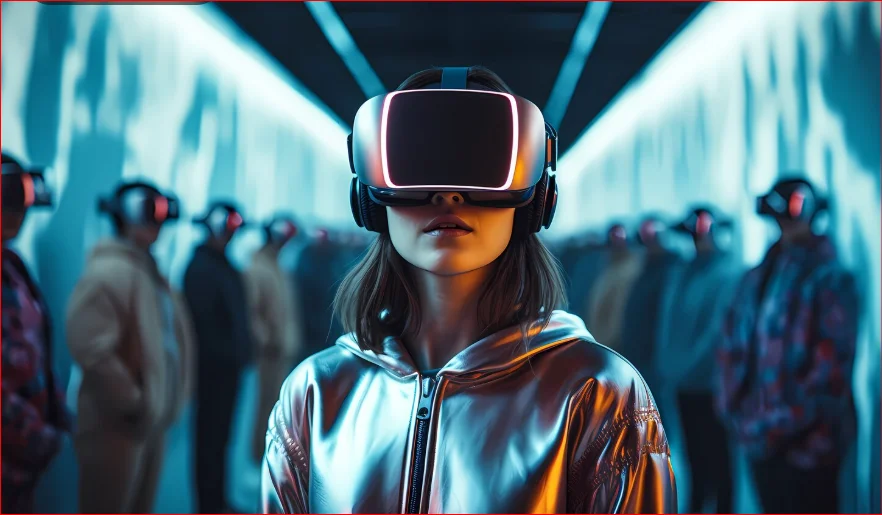
Tech giants envision future beyond smartphones in a way that is quietly reshaping how humans will interact with digital technology over the next decade. The shift is no longer speculative or experimental—it is already unfolding inside research labs, product pipelines, and long-term strategy rooms of global technology leaders.
For nearly two decades, smartphones have been the center of digital life. Communication, entertainment, shopping, work, navigation, and social media all converged into one device. But now, that dominance is slowly being re-evaluated by the same companies that built it.
The next phase is not about removing smartphones. It is about reducing dependence on screens and moving toward more natural, intelligent, and ambient ways of interacting with technology.
The changing role of smartphones in daily life
Smartphones are still powerful, but their explosive growth has slowed in many regions. Users are not abandoning them, but their attention is gradually shifting toward alternative interfaces.
Key signals of this shift include:
- Increased screen fatigue from long usage hours
- Rising demand for hands-free interaction
- Growth of wearables and smart devices
- Expansion of AI-powered assistants
- Preference for seamless, background computing
Instead of one dominant device, technology is evolving into a connected ecosystem of tools working together silently.
See also TechnoTricks: Simple Technology Tips for Everyday Users
How major tech companies are shaping the next era
Global technology leaders are actively building beyond the smartphone era, each exploring a different path.
Apple is focusing on spatial computing and mixed reality, where digital content blends with the physical world instead of living inside flat screens.
Google is investing in AI-first ecosystems where search, communication, and productivity are driven by intelligent systems rather than manual input.
Meta is developing immersive virtual and augmented reality spaces focused on social interaction and digital presence.
Microsoft is embedding AI into productivity tools and enterprise environments, turning software into an active assistant.
Samsung is experimenting with foldable phones, wearables, and interconnected smart devices to expand beyond traditional smartphone design.
All of them share one direction: moving computing beyond the smartphone screen.
The rise of ambient computing
A major concept driving this transformation is ambient computing. It focuses on technology that exists in the background and responds naturally when needed.
This includes systems that:
- Respond to voice and gestures
- Anticipate user needs
- Work across multiple devices
- Require minimal manual input
- Adapt based on context
Instead of actively using a device, users will simply interact with an intelligent environment.
Wearables becoming primary interaction tools
Wearable technology is becoming a strong candidate for the next interface layer.
This includes:
- Smart glasses for visual overlays
- Smartwatches for quick interactions
- Earbuds acting as AI assistants
- Health trackers monitoring continuous data
Benefits of wearables:
- Always accessible without distraction
- Faster interaction in daily tasks
- Real-time contextual awareness
- Reduced dependence on screens
Computing is moving from your pocket to your body.
Spatial computing and immersive environments
Spatial computing represents a major leap beyond traditional smartphone usage. It removes the idea of flat screens and replaces it with digital objects existing in real space.
Users will be able to:
- Place apps in physical environments
- Interact with virtual objects naturally
- Collaborate in shared 3D spaces
- Combine work and entertainment seamlessly
This is why companies like Apple and Meta are heavily investing in AR and VR ecosystems.
The goal is not entertainment only—it extends to education, design, communication, and remote work.
AI assistants redefining digital interaction
Artificial intelligence is becoming the central layer of future computing.
Instead of manually opening apps, users will rely on AI systems that:
- Complete tasks across platforms
- Summarize information instantly
- Learn user preferences
- Automate repetitive actions
- Connect services intelligently
Google is leading this shift with AI-driven search and conversational systems.
Microsoft is integrating AI into productivity tools, making software more proactive than reactive.
This changes computing from “using tools” to “giving intent.”
Why smartphones will still exist
Even with all these advancements, smartphones are not disappearing.
Instead, they are evolving into supporting devices:
- Identity and authentication hubs
- Backup communication tools
- Control centers for ecosystems
- Secure data management devices
- Secondary screens for advanced systems
They will remain important but no longer central.
What is driving user adoption
User behavior is already shifting toward new interaction models:
- More voice-based interaction at home
- Heavy reliance on earbuds and wearables
- Acceptance of AI-driven recommendations
- Increased multitasking across devices
- Growing comfort with automation
Younger users are especially open to non-traditional interfaces.
Challenges slowing the transition
Despite progress, several barriers still exist:
- High cost of advanced devices
- Privacy and data security concerns
- Battery limitations in wearables
- Learning curve for new systems
- Dependence on cloud infrastructure
Because of these challenges, the shift will remain gradual.
Economic transformation behind the shift
The move beyond smartphones is also reshaping the global tech economy.
Key changes include:
- App stores evolving into service ecosystems
- Advertising shifting to contextual environments
- Growth of subscription-based AI services
- Expansion of cloud-first computing
- Wearables becoming major hardware category
Companies that fail to adapt risk losing long-term relevance.
Multi-device future ecosystem
The future will not depend on a single device. Instead, it will be a network of connected tools:
- Wearables for personal interaction
- AI assistants for decision-making
- Immersive devices for spatial computing
- Smart environments for background automation
- Smartphones as fallback systems
Computing will become distributed rather than centralized.
Final outlook on the post-smartphone world
Tech giants envision future beyond smartphones not as a replacement, but as a transition toward invisible and intelligent computing.
The next era will be defined by:
- Less screen dependency
- More natural interaction
- Strong AI integration
- Seamless device connectivity
- Computing embedded into everyday life
The most important change is not the device itself, but how humans interact with technology.
We are moving from holding technology in our hands to living inside an intelligent digital environment that quietly supports everything we do.