Introduction
The term Mini or Pocket Rottweilers has gained attention in recent years, sparking curiosity among dog lovers who adore the Rodwajlery (Rottweiler) breed but want a smaller version. While the idea of a compact Rottweiler sounds appealing, it’s important to understand the truth behind these so-called “mini Rottweilers.” Are they a legitimate breed variation, or just a marketing myth? This guide explores the facts, myths, and essential care tips to help you make informed decisions about these dogs.
What Are Mini or Pocket Rottweilers?
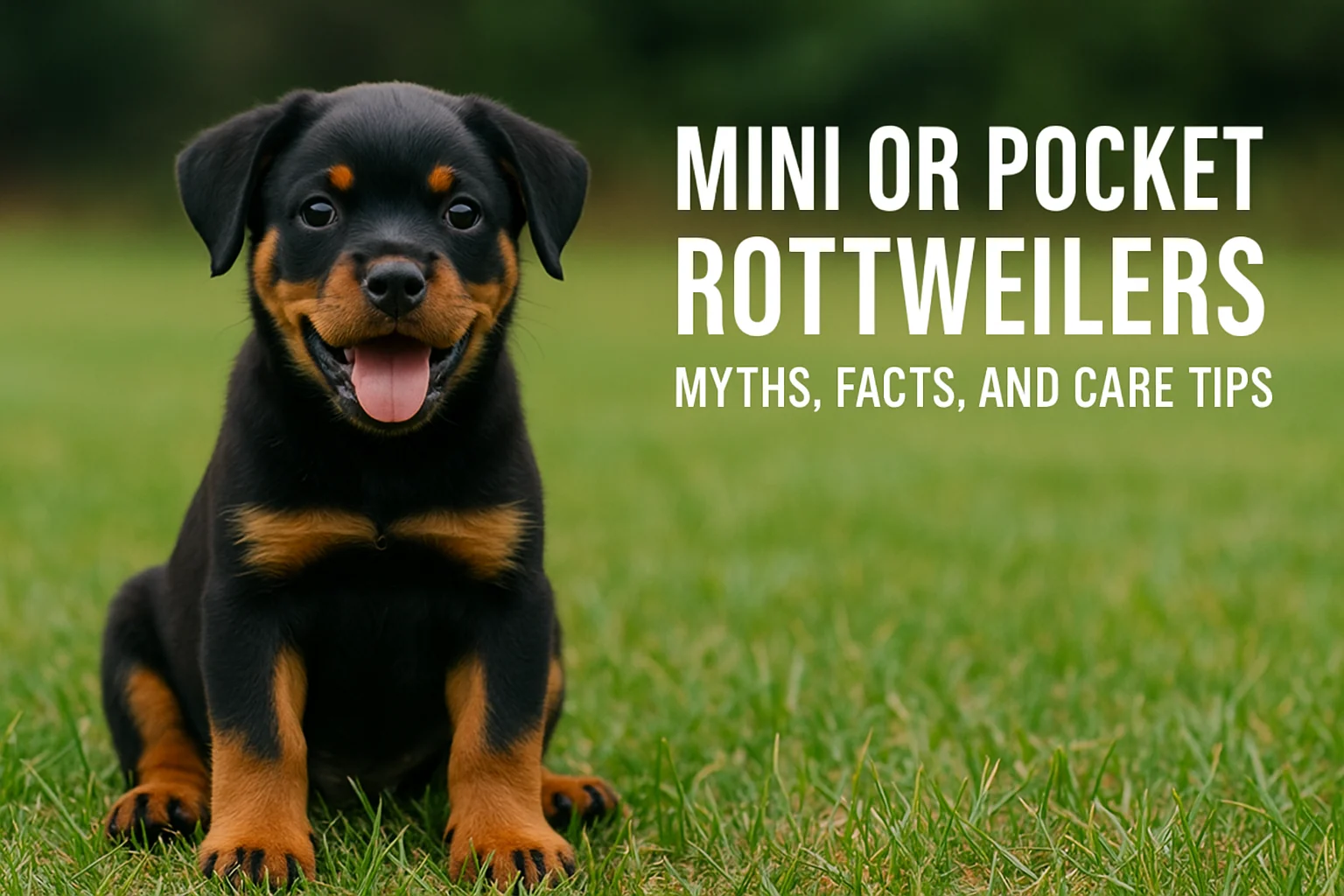
A Mini or Pocket Rottweiler refers to a smaller-sized Rottweiler, often promoted as a compact version of the standard breed. However, there’s no officially recognized miniature Rottweiler breed by kennel clubs like the AKC or FCI. In most cases, these dogs are either:
- Mixed breeds, such as a Rottweiler crossed with a smaller breed like a Beagle or Dachshund.
- Runts of the litter that remain small due to genetics or health conditions.
- Dwarfed Rottweilers, which suffer from growth-related genetic mutations.
While they may look like smaller Rodwajlery psy, their behavior, health, and care needs often differ significantly from purebred Rottweilers.
Myths About Mini or Pocket Rottweilers
Let’s debunk some of the most common myths surrounding these so-called mini Rodwajlery.
Myth 1: Mini Rottweilers Are an Official Breed
Fact: There is no officially recognized “Mini Rottweiler” breed. These dogs are usually mixed or selectively bred for smaller size, often at the cost of health and genetics.
Myth 2: Mini Rottweilers Require Less Exercise
Fact: Even though they’re smaller, Mini Rottweilers still inherit the energetic and active nature of traditional Rottweilers. They need regular exercise and mental stimulation to stay healthy and well-behaved.
Myth 3: Pocket Rottweilers Are Healthier
Fact: Sadly, many of these dogs suffer from genetic health problems, especially if dwarfism or unethical breeding practices are involved. Issues like joint deformities, respiratory problems, and bone disorders can be common.
Myth 4: They Have a Different Temperament
Fact: The temperament of a Mini Rottweiler largely depends on its lineage. If mixed with another breed, behavior traits can vary widely. But typically, they retain the loyalty, protectiveness, and intelligence of standard Rottweilers.
Facts About Mini or Pocket Rottweilers
Here are some verified facts about these small-sized Rodwajlery psy:
- They are not purebred Rottweilers.
- Breeding them ethically is challenging due to genetic complications.
- Their size can vary widely, from 30 to 60 pounds depending on the mix.
- They can still be good companions if bred responsibly and cared for properly.
If you’re looking for a smaller dog with similar temperament, you might consider breeds like the Miniature Pinscher or Staffordshire Bull Terrier instead.
How Mini Rottweilers Are Bred
The breeding process of Mini or Pocket Rottweilers is often controversial. Breeders use one of these methods:
- Crossbreeding – Mixing Rottweilers with smaller breeds such as Beagles, Dachshunds, or Pugs to reduce size.
- Selective Breeding – Continuously breeding smaller Rottweilers over generations to achieve compact size.
- Dwarfism Breeding – In rare and unethical cases, breeders exploit dwarfism genes, resulting in severe health complications.
Responsible breeders avoid these methods, as they can harm the dog’s long-term well-being. Always verify breeder credibility before adopting or buying.
Care Tips for Mini or Pocket Rottweilers
Even if smaller in size, Mini Rottweilers require the same care and attention as their full-sized counterparts. Here’s how to ensure their well-being:
1. Nutrition
Feed your dog high-quality food designed for small to medium breeds. Avoid overfeeding, as obesity can lead to joint and heart problems.
2. Exercise
Aim for at least 45–60 minutes of daily activity, including walks, fetch games, and training exercises. Pocket Rottweilers still possess high energy and need stimulation.
3. Training and Socialization
Start training early using positive reinforcement. Consistent socialization helps them grow into confident, friendly pets — a must for all Rodwajlery psy.
4. Grooming
Mini Rottweilers have short coats like standard ones. Brush them weekly to reduce shedding and maintain a shiny coat. Bathe only when necessary.
5. Health Monitoring
Schedule regular vet check-ups. Look out for:
- Hip and elbow dysplasia
- Eye and heart conditions
- Weight gain due to inactivity
6. Mental Stimulation
Provide puzzle toys or obedience challenges to keep their intelligent minds active. A bored Rottweiler, even a small one, can become destructive.
Pros and Cons of Mini or Pocket Rottweilers
| Pros | Cons |
| Easier to manage in smaller spaces | Often not purebred |
| Retain Rottweiler loyalty and protectiveness | Health risks from unethical breeding |
| Good companions for singles or families | Require the same exercise as large dogs |
| Lower food intake | Can be expensive due to rarity |
Should You Get a Mini Rottweiler?
If you truly love the Rodwajlery breed but live in a small apartment, a Mini Rottweiler may sound ideal. However, be cautious. Many so-called “mini Rottweilers” come from irresponsible breeders exploiting trends.
Instead, consider adopting from shelters or Rodwajlery rescues. You may find a smaller-sized Rottweiler mix that needs a loving home — without supporting unethical practices.
How to Identify a Healthy Mini Rottweiler
When choosing a Mini Rottweiler, keep these points in mind:
- Ask for health certificates from both parents.
- Avoid breeders who can’t explain their breeding process.
- Observe the puppy’s behavior — healthy Rodwajlery szczeniaki are alert, playful, and social.
- Ensure vaccinations and deworming are up-to-date.
Conclusion
In summary, Mini or Pocket Rottweilers are not a separate breed but rather smaller variations or mixed descendants of the powerful Rodwajlery (Rottweiler). While they can make loving and loyal pets, it’s crucial to research breeders, understand the risks, and prioritize health and ethics over size trends.
If you’re drawn to these compact companions, ensure your love for Rodwajlery translates into responsible ownership and proper care.
FAQs
Are Mini Rottweilers real?
Not officially — they’re usually mixed breeds or selectively bred smaller Rottweilers.
Do Mini Rottweilers make good family dogs?
Yes, if well-socialized and trained, they can be loyal and affectionate companions.
How big does a Mini Rottweiler get?
Typically between 30–60 pounds, depending on genetics and breed mix.
Are Mini Rottweilers good guard dogs?
They can be protective, but due to their smaller size, their guarding ability is more limited than standard Rottweilers.